Exploring Central European cuisine from a vegetable point of view
Author Archives: Hannah Rosa
This blog explores how the culinary traditions of Central Europe—across the historical region of Pannonia—can inspire more sustainable ways of cooking and eating today. In times of climate crisis and globalised food systems, I look to local ingredients, old techniques, and mostly plant-based meals rooted in the everyday kitchens of the past.
Let’s rethink what’s on our plates—starting close to home.
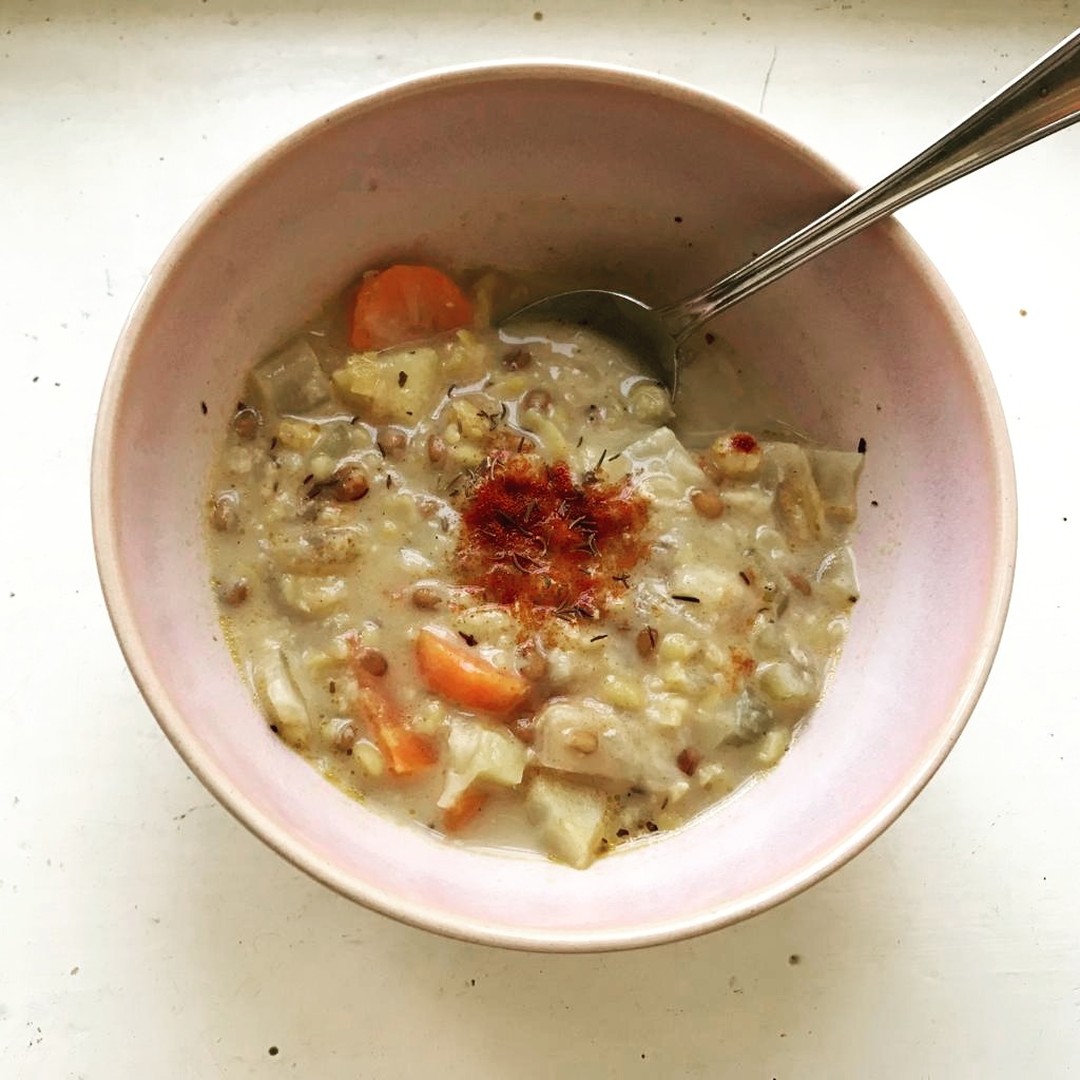
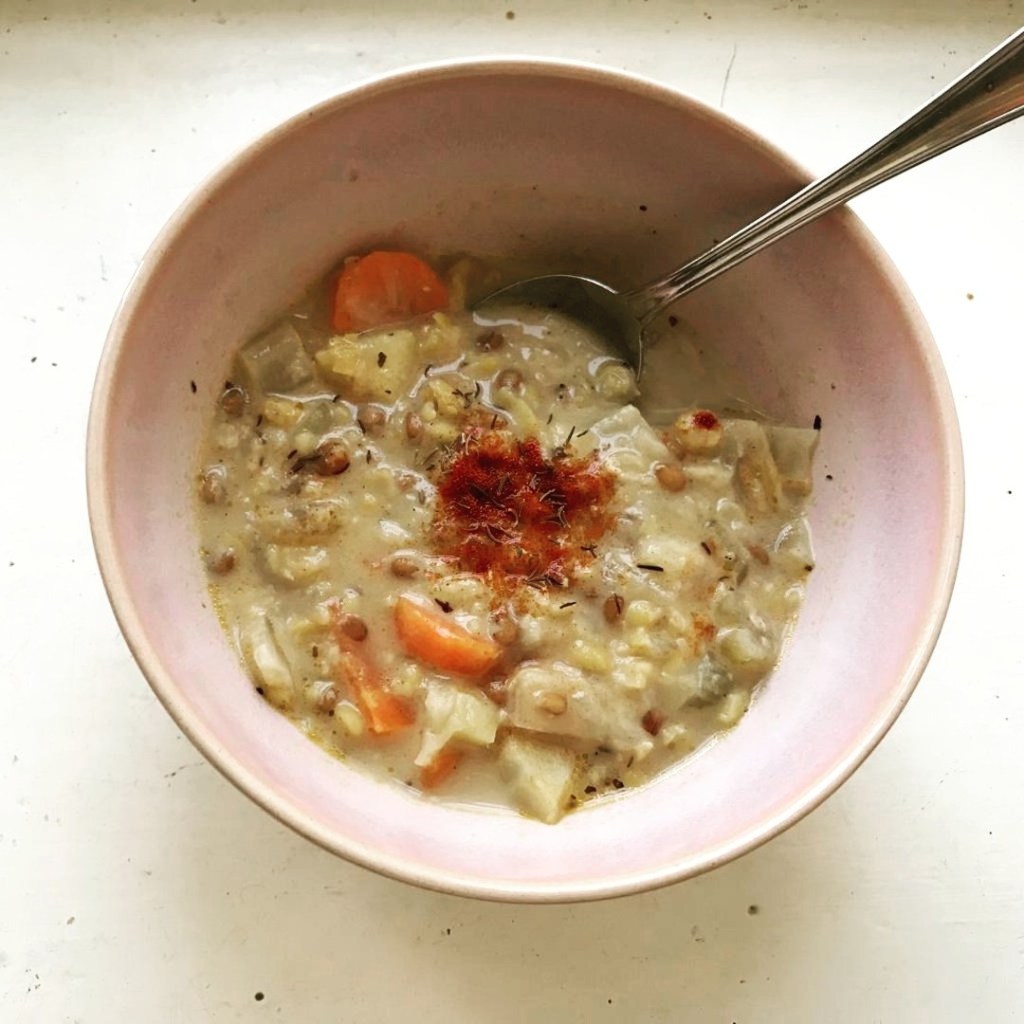
Clearing out my fridge the other day, I made what I jokingly referred to as “Pannonian Minestrone” as it kind of follows the basic of composition of a minestrone in combining vegetables, pulses and grains. Going in a more wintry direction, I went for a combination of caraway seeds, paprika powder, and marjoram, and adding sour cream in the end. More incidentally than intentionally gave the whole soup a pretty Pannonian flavour profile.
Ingredients:
2 Tbsp vegetable oil or olive oil
1 large yellow onion
2 cloves of garlic
2 carrots
2 stalks of celery
1/4 head of celeriac
3 potatoes
2 spring onions
1/4 head of white cabbage
200 g yellow split peas (pre-soaked and washed)
150 g canned farro (alternatively use Ebly)
2 vegetable stock cubes
1/2 Tbsp paprika
1/2 Tbsp caraway seeds
1/2 Tbsp majoram
1/2 tsp chili flakes
5 peppercorns
150 ml sour cream or 100 ml double cream or vegan cream + 1 squeeze of lemon
Salt and pepper to taste
1. Sauté onions in oil until transparent.
2. Add carrots, celery and spring onions and fry for another 5-7 minutes.
3. Add remaining vegetables, farro (or Ebly) and yellow split peas and cover with around 1 litre of water and crumble in vegetable stock. Bring to a boil.
4. Add spices and cook for another 40 minutes or until yellow split peas have started to disintegrate.
5. Turn down the heat and stir in sour cream or (vegan) cream plus a squeeze of lemon. Cook at low heat for another 2 minutes. Add salt and ground pepper to taste.
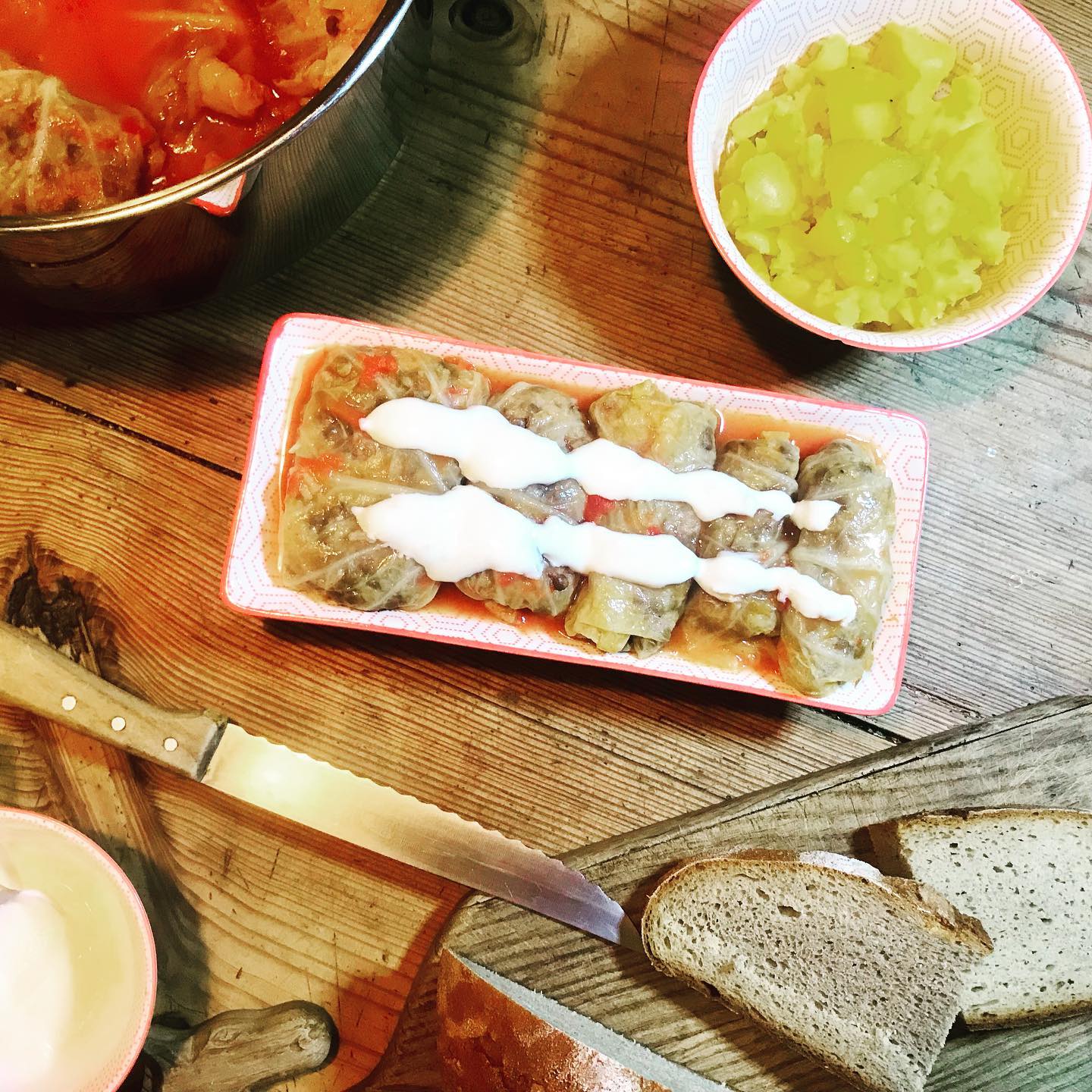
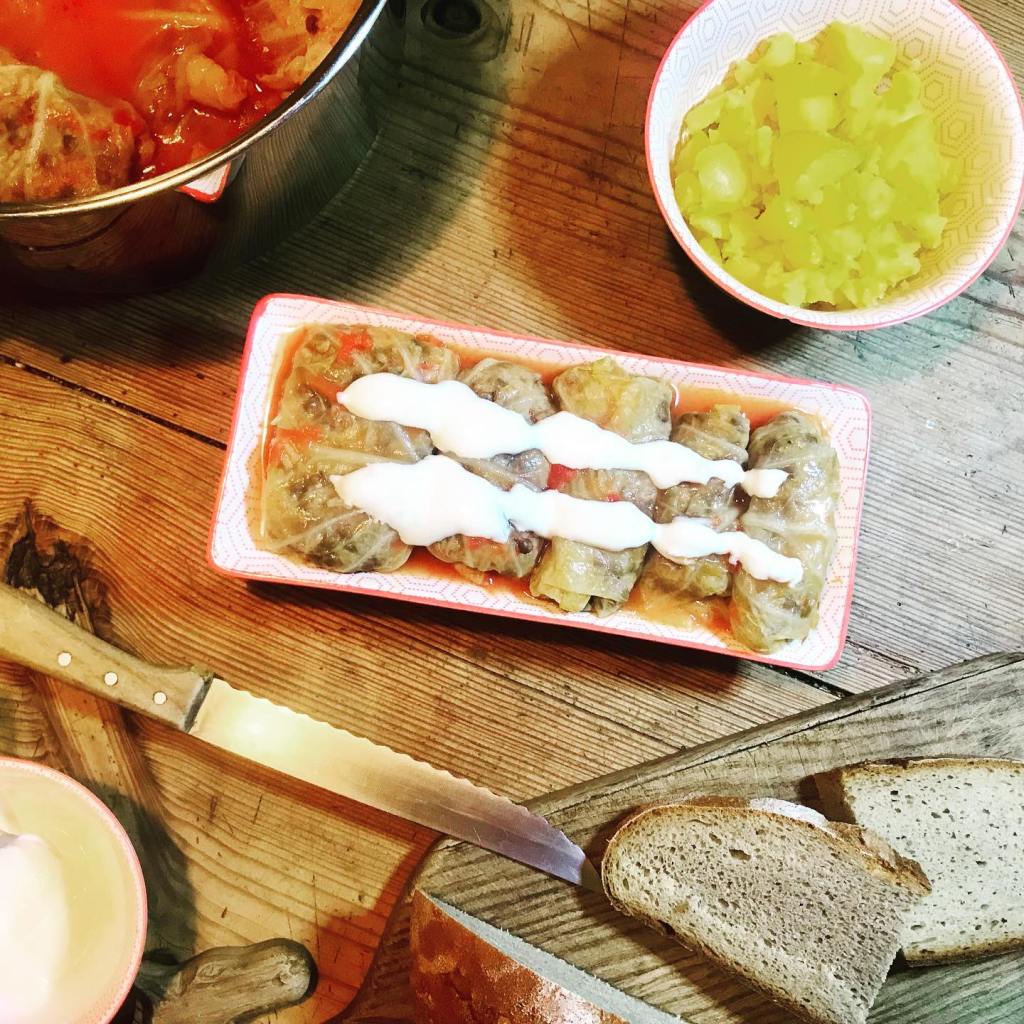
Whether you call them Töltött Káposzta, Sarma, Sarmale or Krautrouladen, cabbage rolls are a popular dish during holidays and celebrations. Although enjoyed throughout the year, it can be found on many dinner tables around Christmas and New Year across the region. Traditionally stuffed with ground beef, pork and rice, this recipe is often linked to the pig slaughter season, with the consumption of pork believed to bring wealth and prosperity. In this recipe, pigs are (hopefully) left to enjoy their own prosperity. To satisfy any superstitious streaks, my version substitutes ground pork for another lucky ingredient –– lentils. Not strictly a Pannonian belief, the ancient Romans gave out pouches of lentils (which they thought to look like coins) to wish others luck and prosperity for the coming year. In acknowledgment of Pannonia’s Roman past, why not serve cabbage pouches stuffed with lentils during future holiday seasons?
Ingedrients:
1 large white cabbage
1 white onion, finely minced
1/2 red pointed pepper
1 clove of garlic
1 Tbsp vegetable oil
1 Tsp salt
1/2 tsp pepper
2 tsp paprika powder
250 g short-grained rice
250 g green lentils
1 vegetable stock cube
For boiling the cabbage rolls:
1 red pointed pepper*
6 peppercorns
1 Tbsp Paprika powder
1/2 tsp smoked paprika powder
2 bayleaves
2 vegetable stock cubes, crumbled
2 Tbsp clarified butter or vegetable oil
1 can chopped tomatoes
2 Tbsp tomato paste
1 Tbsp sugar
Sour cream or vegan crème fraîche to serve
1. Cut the stamp off the bottom of the cabbage and cook it in boiling water until the leaves are slightly soft and pull away easily. When done, take the cabbage out of the pot, but keep the water.
2. Bring rice and lentils to a boil in water, add a vegetable stock cube and cook for about 10 minutes until slightly softened, but not entirely cooked through. Drain and set aside in a large bowl.
3. In the meantime, sauté onion and red pepper for a minimum of 10 minutes until soft, but not browned. Stir in garlic, salt, pepper and paprika powder and fry for another minute. Add to the same bowl that already contains rice and lentils and mix in thoroughly. When cooled down a little use a stick blender and give the mixture a half blend. That’s the filling.
4. Take the cabbage out of the boiling water when it’s ready and drain well. Pull of the leaves one by one and dry them well. Cut of the hard inflexible bits at the bottom and in the middle of the cabbage and set aside. Get a clean kitchen towel and place it in front of you on the work top. Get you mixture ready as well as a large pot that will fit all the cabbage rolls for boiling.
5. Before you start rolling, slice a red pepper in half and place at the bottom of the pan. Use the hard bits of cabbage to cover the remaining gaps, but keep some of it to place between layers of rolls (I also use the cabbage leaves that tore in the process of pulling for this purpose).
6. Now we finally get rolling. Take a cabbage leaf and place it on the kitchen towel in front of you, with the part that was attached to the stem closer to you. Scoop out generous tablespoon of filling from the bowl and place in the centre of the leave. Amounts may vary according to the size of the leaf, but you’ll get the hang of it as you roll.
7. Start by folding in the sides, then roll from the bottom up and press tight with the help of the kitchen towel [I added a video on Instagram for reference]. The towel absorbs water from the cabbage and thereby helps it stick together. Place the finished roll on the bed of red pepper and cabbage a the bottom of the pot. Continue to roll. When you can’t squeeze any more rolls in, put spread some of the cabbage bits we sat aside on top of the rolls and start the next layer. Continue until you have used up all cabbage leaves or until two thirds of the pot are filled.
8. Add the remaining ingredients required for the boiling processes into the pot with the rolls.
9. Before you pour in the cabbage water, weigh down the cabbage rolls with something that can remain in the pot during the cooking process without being damaged or affecting the quality of the meal. I, for example, used a lid from a smaller pot that had enough weight to not start floating atop of the cooking water.
10. Once you weighed down the rolls, add the water from the pot that you cooked the cabbage in and has absorbed a lot of the cabbage flavour. Make sure that everything is covered by the water (add more water if necessary), but that you leave out at least 5 cm on top as the rise and lentils will expand and it will boil over to easy.
11. Put the lid on and simmer the cabbage rolls for 45 min at low to medium heat. When done, carefully lift each roll out of the pot and serve with some of the liquid from the pot and a dash of sour cream or vegan crème fraîche, slices of bread or potatoes. Enjoy!
*Another 2-3 for stuffing in case there is more stuffing than cabbage leaves (optional). If you run out of cabbage leaves, but you still have some filling and space in the pot left, stuff some red peppers and put them into the pot with the cabbage rolls.
Vegetable Pannonia is a space to explore how the food traditions of Central Europe—especially the historical region of Pannonia—can help us think differently about cooking and eating today. In a world shaped by climate change, industrial agriculture, and global supply chains, I want to turn the spotlight back to local, seasonal, mostly plant-based food.
This blog is about curiosity, not purism. You’ll find recipes, reflections, and experiments that draw on the region’s diverse culinary history—reworking old dishes, reviving forgotten ingredients, and imagining what sustainable food could look like in the future.
Let’s see what’s possible when we start with what’s already around us.
 Vegetable Pannonia